A leadership test rarely arrives with a warning label. It shows up when a deadline collapses, a key employee leaves, a customer loses confidence, or a decision must be made before all the facts are available. The best leadership books are not trophies for the shelf. They are field manuals for those moments, helping you see the situation clearly when pressure is trying to narrow your view.
For leaders, entrepreneurs, athletes, and ambitious professionals, reading alone is not the point. Plenty of smart ideas fail because they never survive contact with a difficult conversation, a bad quarter, or a team that needs direction now. The books worth your time offer more than inspiration. They give you language for hard choices, habits that can be practiced, and a standard to return to when your confidence takes a hit.
Why Most Leadership Advice Fails Under Fire
Leadership advice often sounds convincing in calm conditions. Be decisive. Delegate. Communicate. Build trust. All true, and all incomplete. The real question is what those principles look like when resources are tight, emotions are high, and every available option carries a cost.
A strong book does not pretend leaders can eliminate uncertainty. It teaches them to operate inside it. It distinguishes urgency from panic, confidence from arrogance, and accountability from blame. That distinction matters because teams study a leader's behavior most closely when the stakes rise. They remember whether you hid from the problem, spread fear, or created a path forward.
The weak books promise easy control. The useful ones acknowledge friction. They show that leadership can require a fast decision one day and patient restraint the next. It depends on the mission, the people involved, what is at risk, and what information is still missing.
How to Choose Leadership Books Worth Reading
Do not choose a book simply because its author is famous or its message sounds forceful. A compelling stage presence is not the same as an approach you can use on Monday morning. Look for books built around a problem you actually face.
If you are leading through volatility, seek work that addresses judgment, resilience, priorities, and communication under pressure. If your team is capable but stalled, focus on accountability, decision rights, and execution. If you are building a company, you may need lessons on hiring, culture, cash discipline, and the lonely responsibility of making calls others cannot make.
The author also matters, though not in the way many readers assume. Credentials are helpful, but context is better. Has the writer dealt with complex organizations, conflicting interests, changing markets, or real consequences? Can they explain not only what worked, but why it worked and where it might fail? The most credible leadership writing leaves room for the reality that no two teams, markets, or crises are identical.
Be cautious with books that turn leadership into personality theater. You do not need to become louder, harder, or more charismatic to lead well. You need a reliable way to assess a situation, set a direction, and help others perform when conditions are imperfect.
Read for tension, not slogans
A useful test is simple: does the book wrestle with trade-offs? Leadership is full of them. Move quickly or gather more intelligence. Protect the relationship or confront poor performance. Keep control or let a capable person own the decision. A book that only gives clean answers to messy problems may feel good, but it will not prepare you for the real thing.
Look for specific scenes, decisions, and consequences. The lesson should be clear enough to remember, yet flexible enough to apply in a different setting. That is how an idea becomes a tool rather than a quote.
Read Less, Apply More
The fastest way to waste a leadership book is to consume it like entertainment. Marking pages is not implementation. Neither is repeating a favorite line in a meeting.
Instead, read with one active leadership challenge in mind. It might be a conflict between two high performers, a project that keeps slipping, or the fact that your team waits for your approval on every small decision. As you read, ask one question: what would I change this week if I took this idea seriously?
Keep the answer small and observable. If the book argues for clearer expectations, rewrite the outcome, deadline, and decision owner for one important project. If it stresses feedback, schedule one conversation you have postponed. If it argues that leaders must protect focus, remove one unnecessary meeting from the calendar and explain why.
Then watch what happens. Did the team become clearer or merely busier? Did the conversation improve trust, or did you avoid being direct? Did delegating create ownership, or did you hand off a task without the authority needed to complete it? Application exposes the gap between an attractive theory and your current operating habits.
This approach also keeps reading from becoming another form of procrastination. You do not need fifty new frameworks. You need two or three principles that improve how you make decisions, communicate intent, and recover after mistakes.
The Core Subjects Every Leader Should Study
Leadership books vary widely, but the strongest personal library covers several pressure points. Start with decision-making. Leaders must learn how to separate signal from noise, recognize assumptions, and decide when more analysis will help versus when it is merely delaying action.
Next, study communication. In unstable moments, people do not need a flood of words. They need a truthful assessment, a clear priority, and an understanding of what happens next. Silence creates rumors. False certainty destroys trust. Clear communication occupies the ground between those two failures.
Accountability deserves equal attention. Great teams do not run on fear, but they also do not tolerate chronic ambiguity. People need to know what they own, how success is measured, and what happens when commitments are missed. Leaders set that standard by owning their own errors first.
Finally, study resilience. Pressure is not only a test of stamina. It is a test of recovery, perspective, and emotional control. The leader who can slow down long enough to think clearly may create more value than the leader who appears busiest. Resilience means maintaining standards when circumstances make standards inconvenient.
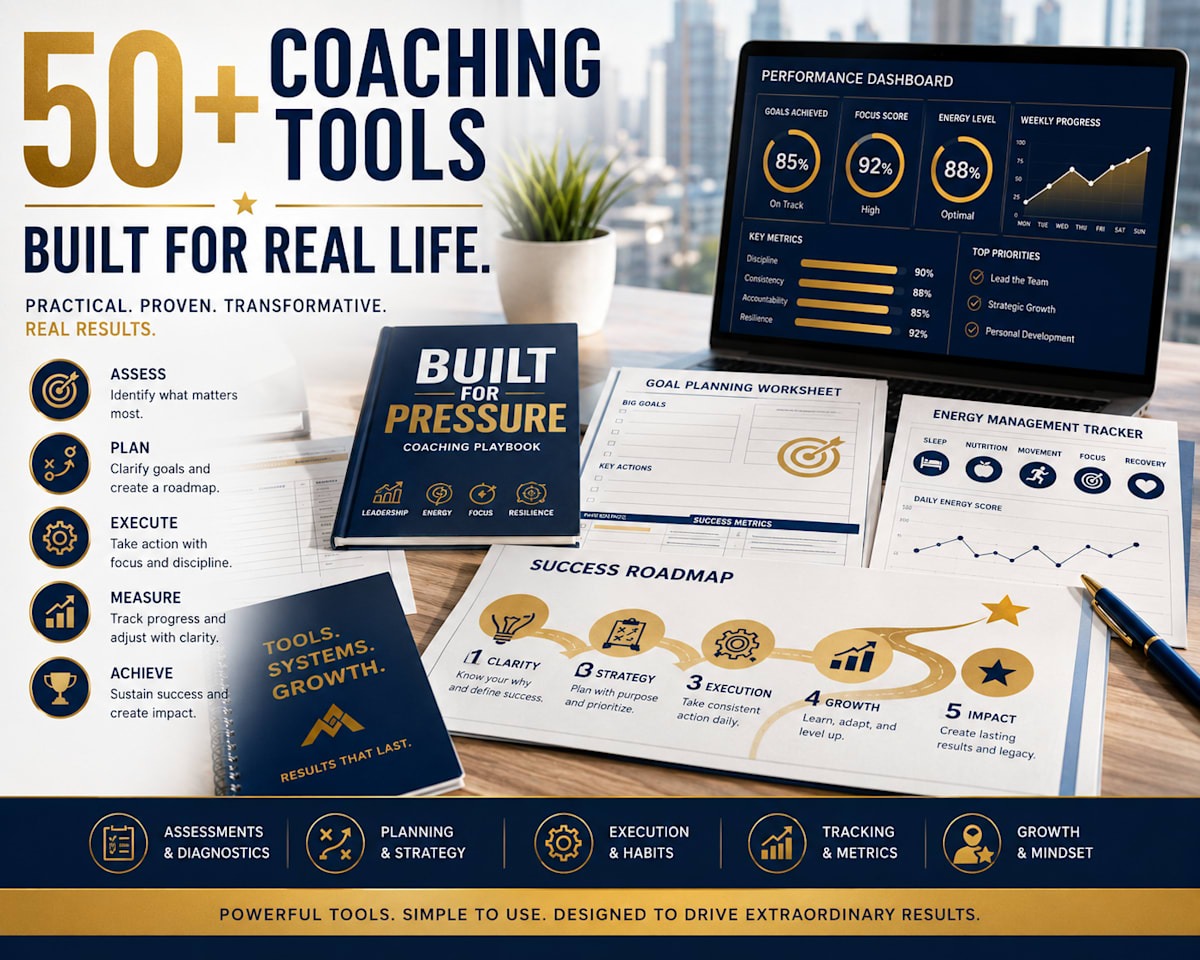
Bjorn Abrahamsen's Built for Pressure belongs in this practical category. Its focus is not on pretending pressure can be avoided, but on building the discipline to perform through it - a useful lens for leaders, athletes, and entrepreneurs whose decisions carry consequences beyond their own workload.
Turn Ideas Into a Leadership Operating System
The books that change behavior are revisited. After finishing one, do not rush to the next title. Write down the three ideas that challenged you most, then translate each into a behavior your team could see.
For example, “be more decisive” is too vague to use. “State the decision owner and deadline before the meeting ends” is measurable. “Build trust” is abstract. “Address missed commitments within twenty-four hours, privately and directly” is an operating rule.
Share the rule when appropriate. Leadership is not a private performance. If you are changing how decisions are made, your people need to understand the new expectation. Invite useful pushback, especially from those close to the work. A senior leader may see the strategy clearly while missing a bottleneck that is obvious to the person carrying out the plan.
Review the result after a few weeks. Keep what improved speed, clarity, or ownership. Adjust what created confusion. Discard what looked impressive on paper but did not fit your organization. This is where judgment enters the picture. A leadership principle should guide your thinking, not replace it.
Build a Library for the Moment You Cannot Predict
Your next hard moment may not look like the last one. It may be a market shift, a security incident, a public failure, or a conversation that changes the future of a person on your team. No book can script the response. But the right one can make you harder to surprise.
Choose writers who respect complexity without hiding behind it. Read with a live problem in mind. Practice the ideas while the cost of learning is still manageable. When pressure arrives, your team will not need you to quote a chapter. They will need you to see clearly, speak plainly, and move with purpose.